November 10, 2026
Finding a bird nest in your dryer vent is more common than you might think, especially during the spring and early summer months in Connecticut. Birds often seek out warm, sheltered spaces to build their nests, and an exterior dryer vent can provide an attractive nesting location.
Unfortunately, a bird nesting in your dryer vent can create serious problems for your home. From restricted airflow and longer drying times to potential fire hazards, a blocked dryer vent is something homeowners shouldn’t ignore.
If you suspect there’s a bird in your dryer vent, here’s how to recognize the warning signs, what to do next, and how professional dryer vent cleaning can help.
Why Do Birds Build Nests in Dryer Vents?
Birds naturally look for protected spaces where they can build nests and raise their young. Dryer vents can be particularly appealing because they offer shelter from rain, wind, and predators.
Several factors make dryer vents attractive nesting spots:
- Warmth: Dryer exhaust can create a warm environment that attracts birds during cooler weather.
- Protection: Exterior vent openings can provide shelter from harsh weather and predators.
- Easy access: Missing, damaged, or improperly functioning vent covers allow birds to enter.
- Nesting materials: Lint and other debris around dryer vents can provide convenient materials for nest construction.
In Connecticut, birds such as house sparrows and European starlings may investigate exterior vents and other openings around homes.
While these nesting locations may seem convenient for birds, they can cause significant problems for homeowners.
5 Signs You Have a Bird Nest in Your Dryer Vent
A bird nest inside a dryer vent isn’t always immediately visible. However, there are several warning signs that may indicate birds have entered your dryer exhaust system.
1. Chirping or Scratching Sounds Coming From the Vent
One of the most obvious signs of a bird in your dryer vent is hearing chirping, scratching, or fluttering sounds near the dryer or exterior exhaust opening.
These noises may indicate an adult bird entering the duct or baby birds inside a nest.
2. Your Clothes Take Longer to Dry
If your dryer suddenly requires multiple cycles to dry a normal load of laundry, restricted airflow could be the problem.
A bird nest can partially or completely block the exhaust duct, preventing hot, moist air from escaping efficiently.
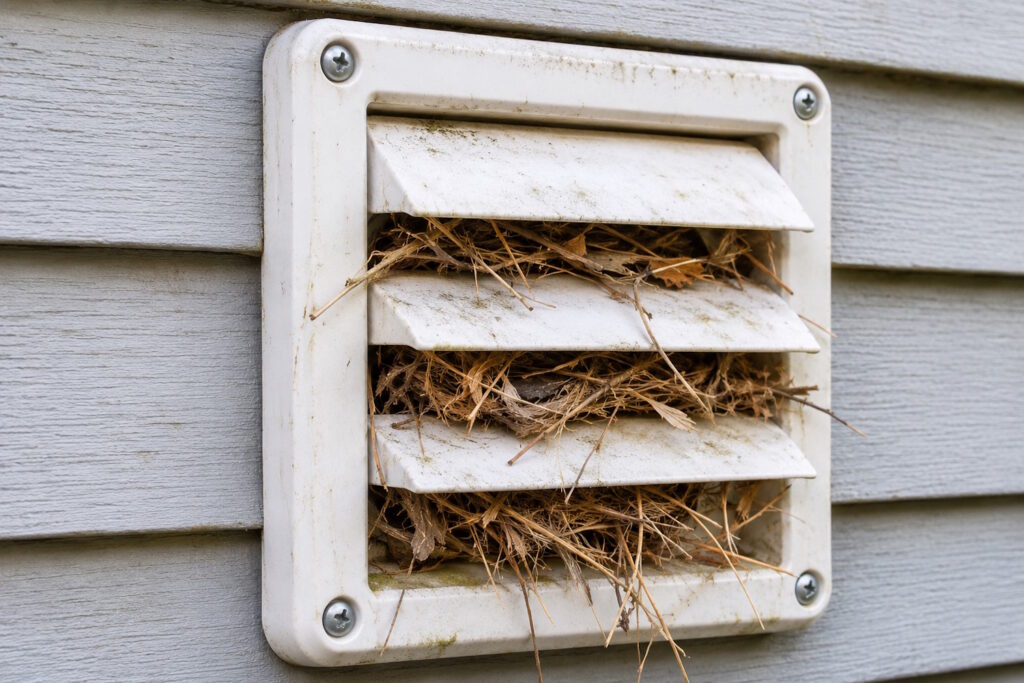
3. Twigs, Grass, or Other Debris Around the Vent
Birds use materials such as twigs, grass, leaves, and feathers to construct their nests.
If you notice these materials sticking out of your exterior dryer vent, there’s a good chance a bird has started building a nest inside.
4. Your Dryer Is Overheating
A blocked dryer vent can cause heat to build up inside the appliance and exhaust system.
Warning signs may include unusually hot clothing, a dryer that feels excessively warm, or a dryer that shuts off before completing its cycle.
If you suspect a blockage, stop using your dryer until the vent has been inspected.
5. Birds Frequently Visiting Your Exterior Vent
Have you noticed birds repeatedly flying toward the same area of your house?
If they’re carrying twigs or other nesting materials into an exterior dryer vent, they may be actively constructing a nest.
Is a Bird Nest in Your Dryer Vent Dangerous?
Yes. A bird nest in a dryer vent can create several safety and performance concerns.
Increased Risk of Dryer Fires
Dryers need unrestricted airflow to operate safely. When a bird nest blocks the exhaust duct, heat can accumulate and lint may build up behind the obstruction.
Because lint and dried nesting materials are combustible, this combination can increase the risk of a dryer fire.
Carbon Monoxide Concerns With Gas Dryers
If you have a gas dryer, a blocked exhaust system presents an additional concern.
Gas dryers produce combustion gases that must be properly vented outdoors. A blocked or restricted exhaust duct can interfere with safe venting and potentially contribute to carbon monoxide exposure.
Reduced Dryer Efficiency
A blocked vent forces your dryer to work harder and may increase drying times, energy consumption, and wear on the appliance.
Unpleasant Odors and Contamination
Bird nests can contain droppings, feathers, insects, and other organic materials.
These materials may create unpleasant odors or introduce contaminants into the dryer exhaust system.
How to Get a Bird Out of a Dryer Vent Safely
If you’re wondering how to get a bird out of your dryer vent, the most important thing is to avoid injuring the bird or creating additional hazards.
Here’s what you should do.
Step 1: Stop Using Your Dryer
Turn off your dryer immediately if you suspect birds or nesting materials are inside the exhaust duct.
Running the appliance could expose the birds to excessive heat and worsen an existing blockage.
Step 2: Inspect the Exterior Vent
From a safe, accessible location, visually inspect the exterior dryer vent opening.
Look for nesting materials, damaged vent flaps, or signs of bird activity.
Avoid reaching into the vent or attempting to pull out a nest without first determining whether birds, eggs, or chicks are present.
Step 3: Determine Whether the Nest Is Active
An active nest may contain eggs, baby birds, or adult birds caring for their young.
Many native bird species and their active nests are protected under federal law. Legal protections vary by species and circumstances, so removal should not be attempted until the nest’s status has been evaluated.
If you believe the nest is active, contact a qualified wildlife removal professional or appropriate wildlife authority for guidance.
Step 4: Contact a Professional Dryer Vent Cleaning Company
If you suspect a bird nest is blocking your dryer vent, contact a professional dryer vent cleaning company like Dryer Vent Cleaners of Connecticut. Professionals have the equipment and experience needed to inspect your dryer vent, identify obstructions, and safely remove nesting materials and accumulated debris.
If birds, eggs, or chicks are still present, a qualified wildlife removal specialist may need to address the active nest before cleaning can begin.
Once the nest is no longer occupied and removal is permitted, our experts can help clear the remaining debris, restore proper airflow, and reduce potential fire hazards.
Step 5: Clean and Inspect the Dryer Vent
After the nest is removed, the entire dryer vent system should be inspected and cleaned.
This helps remove leftover nesting materials, accumulated lint, feathers, and other debris that could continue restricting airflow.
Learn more about our professional dryer vent cleaning services in Connecticut.
Step 6: Install a Bird-Resistant Dryer Vent Cover
To help prevent birds from returning, consider installing an appropriate exterior dryer vent termination designed to discourage animal entry while allowing unrestricted exhaust airflow.
Avoid ordinary screens or mesh coverings that can trap lint and create additional fire hazards.
Can You Remove a Bird Nest From a Dryer Vent Yourself?
Homeowners may be tempted to remove visible nesting materials from an exterior vent. However, DIY removal isn’t always the safest or most effective solution.
There are several reasons to consider professional assistance:
- Birds, eggs, or chicks may still be inside the vent.
- Nesting materials may extend farther into the duct than you can see.
- Improper tools can damage the dryer vent or push debris deeper inside.
- Removing only the visible nest may leave behind lint and other obstructions.
- An improperly installed replacement cover can restrict airflow.
For these reasons, professional bird nest removal and dryer vent cleaning are often the best approach, particularly when the blockage is deep inside the duct.
If live birds are present, wildlife removal may need to take place before the dryer vent can be professionally cleaned.
How to Prevent Birds From Nesting in Your Dryer Vent
Once a nest has been removed, prevention is the next priority.
Install a Proper Exterior Dryer Vent Cover
A properly functioning exterior dryer vent cover helps prevent birds and other animals from entering the exhaust duct.
Choose a dryer-rated termination with a backdraft damper or other manufacturer-approved bird-resistant design that does not restrict airflow.
Inspect Your Exterior Dryer Vent Regularly
Check your exterior vent periodically, particularly during Connecticut’s spring nesting season.
Make sure the vent flap opens and closes properly and that there are no visible nesting materials or other obstructions.
Schedule Routine Dryer Vent Cleaning
Regular dryer vent cleaning helps remove lint and debris that can accumulate inside your exhaust system.
It also provides an opportunity to identify damaged vent components, airflow restrictions, and potential entry points for birds.
Not sure when your dryer vent was last cleaned? Read our guide on how often you should clean your dryer vent.
Address Damaged or Missing Vent Covers
If your exterior vent cover is broken, missing, or stuck open, have it repaired or replaced promptly.
Even a small opening can provide birds with access to your dryer exhaust system.
Frequently Asked Questions About Birds in Dryer Vents
Can a bird nest in a dryer vent cause a fire?
Yes. A bird nest can restrict airflow, causing heat and lint to accumulate inside the dryer exhaust system. Because lint and nesting materials can be flammable, this increases the risk of a dryer fire.
How do I know if a bird is stuck in my dryer vent?
Common signs include chirping, scratching, or fluttering sounds coming from the vent, visible nesting materials, and birds repeatedly visiting the exterior exhaust opening. Stop using the dryer and contact a qualified professional if you suspect a bird is trapped.
How much does bird nest removal from a dryer vent cost?
The cost depends on the location of the nest, accessibility of the vent, severity of the blockage, and whether wildlife removal is required. A professional inspection can help determine the appropriate service and cost.
Can I turn on my dryer to scare birds away?
No. Never run your dryer to scare birds out of the exhaust duct. The heat can injure or kill birds and may create a fire hazard if nesting materials are blocking the vent.
Will birds leave a dryer vent on their own?
Birds may eventually leave after their young have fledged, but nesting materials can remain inside the duct. Even after the birds are gone, the vent should be inspected and cleaned before using the dryer again.
What is the best way to keep birds out of dryer vents?
The best prevention method is a properly installed, bird-resistant exterior dryer vent termination that maintains safe airflow. Regular inspections and dryer vent cleaning can also help identify potential problems before birds begin nesting.
Need Bird Nest Removal or Dryer Vent Cleaning in Connecticut?
If you’ve discovered a bird nest in your dryer vent, don’t ignore it. Even after the birds have left, leftover nesting materials and accumulated lint can restrict airflow, reduce dryer efficiency, and increase fire risks.
At Dryer Vent Cleaners of CT, we help Connecticut homeowners maintain cleaner, safer, and more efficient dryer exhaust systems through professional dryer vent cleaning.
Whether you’re dealing with a suspected blockage, excessive lint buildup, or nesting debris left behind by birds, having your dryer vent properly inspected and cleaned can help restore airflow and prevent future problems.
Contact Dryer Vent Cleaners of CT today or call 860-414-4206 to learn more about professional dryer vent cleaning and getting your dryer exhaust system back in working order.