December 24, 2025
Winter brings colder temperatures, sealed-up homes, and heavier appliance use. During these months, dryers often work harder and run more frequently as bulky winter clothing, blankets, and bedding move through weekly laundry cycles. While most people focus on heating systems and insulation during winter, dryer vent safety frequently goes overlooked, even though it becomes more critical during this season.
Dryer vent safety is not just a maintenance topic. It directly affects fire risk, indoor air quality, energy usage, and the lifespan of your dryer. In Connecticut, where winters can be long and harsh, blocked or poorly functioning dryer vents can create problems that build quietly until they become expensive or dangerous.
Understanding how winter conditions affect dryer vent systems can help reduce unnecessary risk while keeping your home running efficiently throughout the colder months.
Why Winter Puts Extra Stress on Dryer Vent Systems
During winter, homes are closed tightly to keep warm air inside. This reduced airflow changes how moisture and heat move through living spaces. When dryers run, they generate warm, moist air that must exit the home through the venting system. If that air meets cold exterior temperatures, condensation becomes more likely.
Lint mixed with moisture behaves differently than dry lint. It clumps, sticks to vent walls, and hardens faster. Over time, airflow becomes restricted, causing dryers to overheat or cycle inefficiently. According to data shared by the U.S. Fire Administration, failure to clean dryer vents is one of the leading contributors to residential dryer fires, with winter months seeing elevated risk due to heavier dryer use.
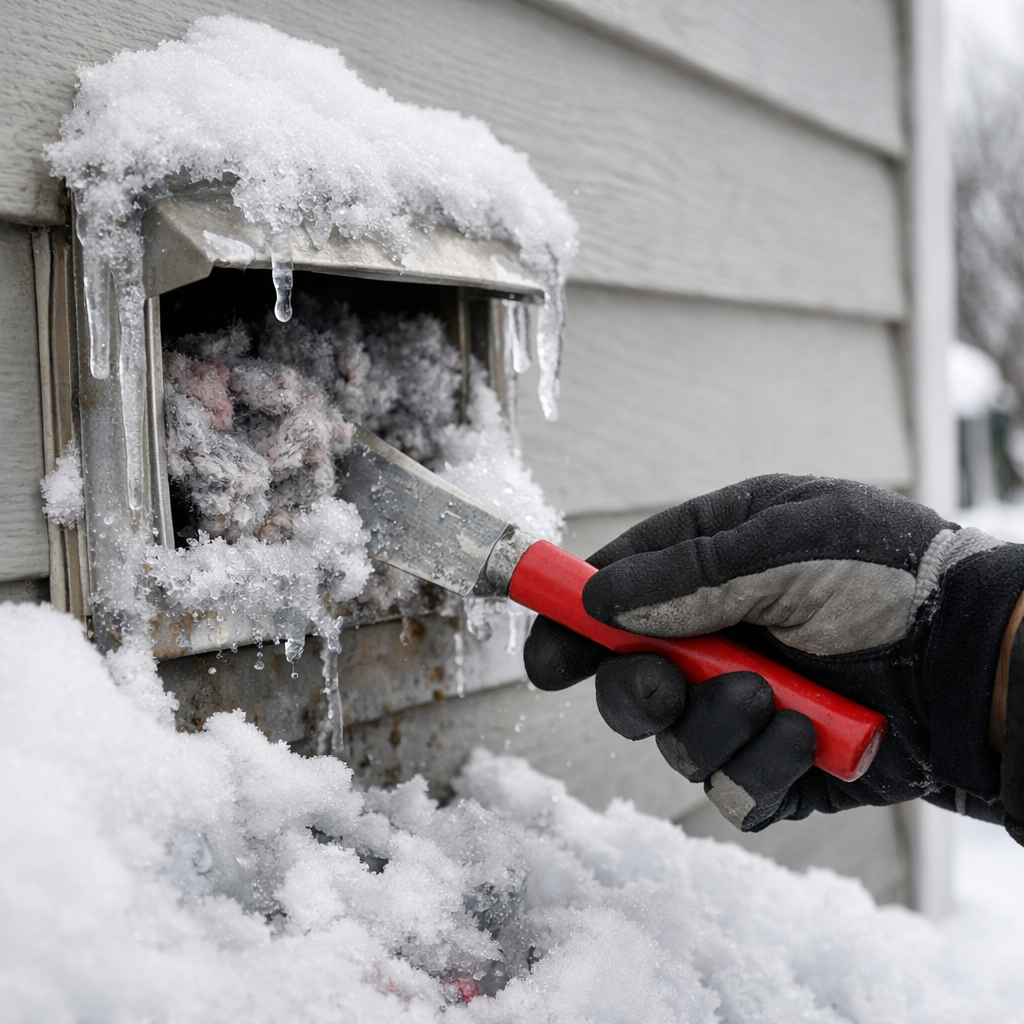
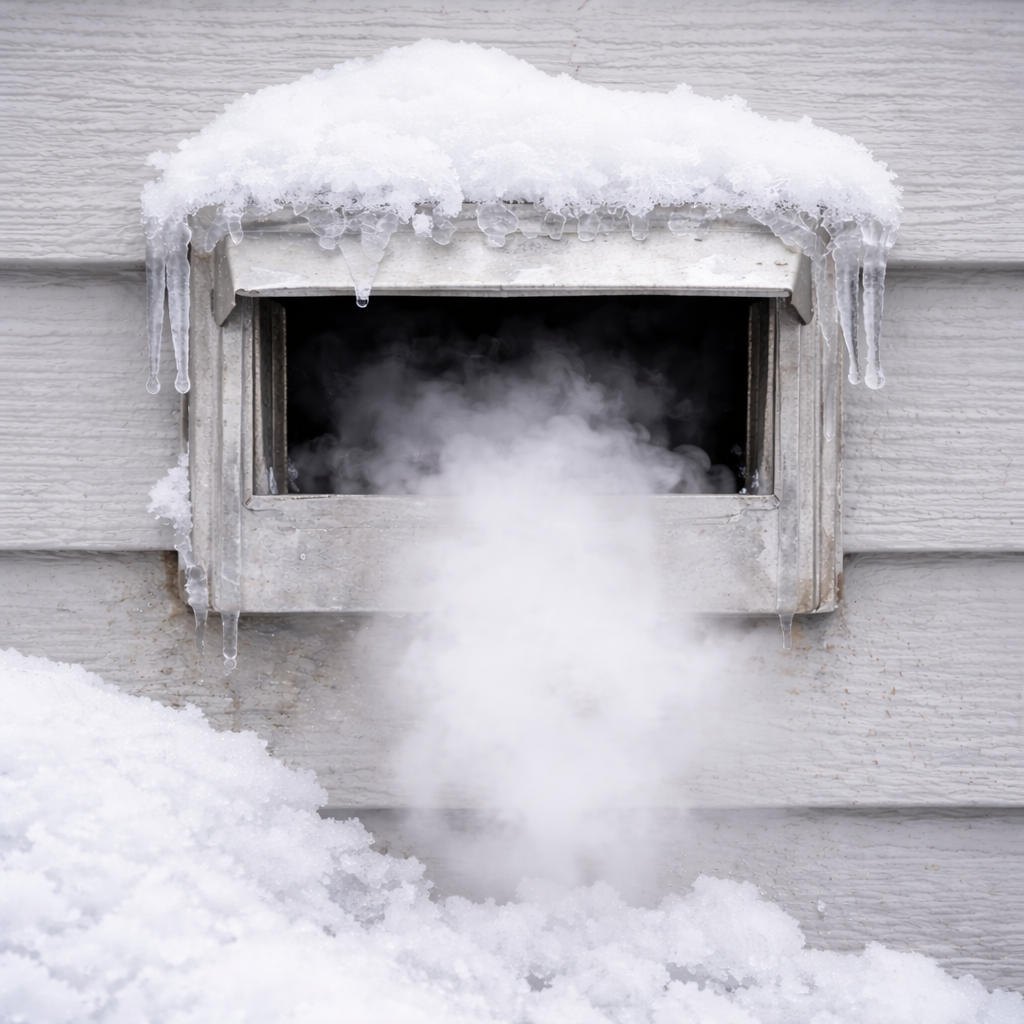
Cold weather also introduces ice buildup near exterior vent hoods, which can partially or fully block exhaust airflow. When warm air cannot escape, heat builds up inside the dryer and vent line, creating conditions that elevate fire risk.
Lint Accumulation Becomes More Aggressive in Cold Months
Winter clothing produces more lint than lighter summer fabrics. Heavy sweaters, fleece, flannel, and thermal materials shed fibers rapidly, especially when washed frequently. Add blankets, comforters, and layered clothing, and lint production increases significantly.
Even with regular lint trap cleaning, lint escapes into the vent system. Over time, it settles along the duct walls. In winter, moisture from condensation causes lint to adhere more aggressively, narrowing airflow passage faster than many homeowners expect.
Organizations such as the National Fire Protection Association regularly report that dryer-related fires often stem from lint accumulation that was not visible or easily detected by homeowners. This buildup rarely causes immediate failure, which makes it easy to overlook until performance drops or warning signs appear.
How Frozen or Blocked Exterior Vents Create Hidden Problems
Exterior vent covers are exposed to snow, ice, freezing rain, and debris during winter. Snowdrifts, icicles, or ice buildup can restrict the flap that opens to release exhaust air. When that flap cannot open fully, hot air backs up into the vent line.
Blocked vents cause dryers to run hotter and longer. Clothes take multiple cycles to dry, energy bills climb, and internal dryer components experience added strain. The Consumer Product Safety Commission has highlighted that prolonged dryer operation due to restricted airflow increases the likelihood of overheating events.
Homeowners may notice warm laundry rooms, condensation on nearby walls or windows, or a burning smell during dryer operation. These are not minor inconveniences. They signal airflow restriction that should be addressed promptly.
Carbon Monoxide Risks with Gas Dryers During Winter
Homes with gas dryers face an additional concern during winter. When dryer vents become obstructed, exhaust gases may not exit properly. While dryers are designed to vent combustion byproducts outdoors, blocked vents can allow gases to backflow into living spaces.
Carbon monoxide is colorless and odorless, making it particularly dangerous. The Centers for Disease Control and Prevention reports that improper venting of fuel-burning appliances contributes to preventable carbon monoxide exposure incidents every year.
Cold weather exacerbates this risk because sealed homes limit natural air exchange. Carbon monoxide detectors should be present near laundry areas, but they do not replace proper dryer vent maintenance.
Longer Dry Times Are Not Just an Efficiency Issue
Many homeowners assume longer dry times are simply a sign of aging appliances or overloaded machines. In winter, extended drying cycles often point to airflow restriction rather than appliance failure.
When vents are clogged, dryers compensate by running longer and hotter. This increases wear on heating elements, motors, belts, and sensors. Over time, repair costs accumulate, and appliance lifespan shortens.
Energy efficiency organizations like ENERGY STAR note that restricted airflow causes dryers to consume more electricity or gas per load. During winter, when energy costs already climb due to heating demands, inefficient dryer operation quietly adds to monthly expenses.
Moisture Buildup and Indoor Air Quality Concerns
Dryer vents do more than remove lint. They carry moisture out of the home. When that moisture becomes trapped due to restricted airflow, it may leak back into walls, ceilings, or laundry spaces.
Excess moisture contributes to mold growth, especially in colder months when indoor humidity levels fluctuate. The Environmental Protection Agency has documented links between moisture buildup and indoor air quality issues, including respiratory irritation and structural damage.
In winter, moisture that escapes into wall cavities can also freeze and thaw repeatedly, weakening building materials over time. What begins as a dryer vent issue can eventually impact insulation, drywall, and framing if left unaddressed.
Warning Signs That Should Not Be Ignored in Winter
Certain symptoms appear more frequently during winter and should prompt immediate attention. Clothes that feel unusually hot at the end of a cycle, burning odors, excessive lint around the dryer area, or vents that do not visibly exhaust air outside are all indicators of restricted airflow.
Another overlooked sign is condensation around windows or walls near the laundry area. This moisture often originates from trapped exhaust air that has nowhere else to go.
Fire safety organizations such as UL Solutions emphasize that small warning signs often precede dryer-related incidents. Addressing them early reduces risk while maintaining consistent dryer performance.
Why Professional Dryer Vent Cleaning Matters Before and During Winter
While homeowners routinely clean lint traps, internal vent lines require specialized tools and knowledge to clean thoroughly. Dryer vents can run through walls, ceilings, crawl spaces, and attics, accumulating debris in areas that are not visible or accessible without proper equipment.
Winter-specific cleaning is especially valuable because it removes compacted lint mixed with moisture before freezing temperatures worsen blockages. Professional cleaning also verifies that vent materials, routing, and exterior terminations function as intended.
Regular maintenance aligns with guidance from organizations like the American Red Cross, which encourages preventive measures to reduce household fire risks during colder months when indoor appliance use increases.
How Winter Maintenance Supports Year-Round Safety
Addressing dryer vent safety during winter has benefits that extend beyond the season. Clean vents support consistent airflow, balanced moisture control, and stable appliance performance throughout the year.
Homes that receive regular dryer vent maintenance experience fewer breakdowns, lower energy consumption, and reduced fire risk. Winter simply magnifies issues that may exist quietly during warmer months.
For homeowners, renters, and property managers alike, winter is an ideal time to evaluate dryer vent systems because usage patterns highlight problems more clearly.
Closing Remarks
Winter places unique demands on household systems, and dryer vents are no exception. Increased lint production, cold temperatures, moisture buildup, and sealed indoor environments combine to create conditions where neglected vents become a serious concern. Paying attention to dryer vent safety during winter protects your home, improves efficiency, and reduces risks that often remain unseen until something goes wrong. Taking a proactive approach now can make the colder months safer and more comfortable while supporting the long-term health of your living space.