November 2, 2025
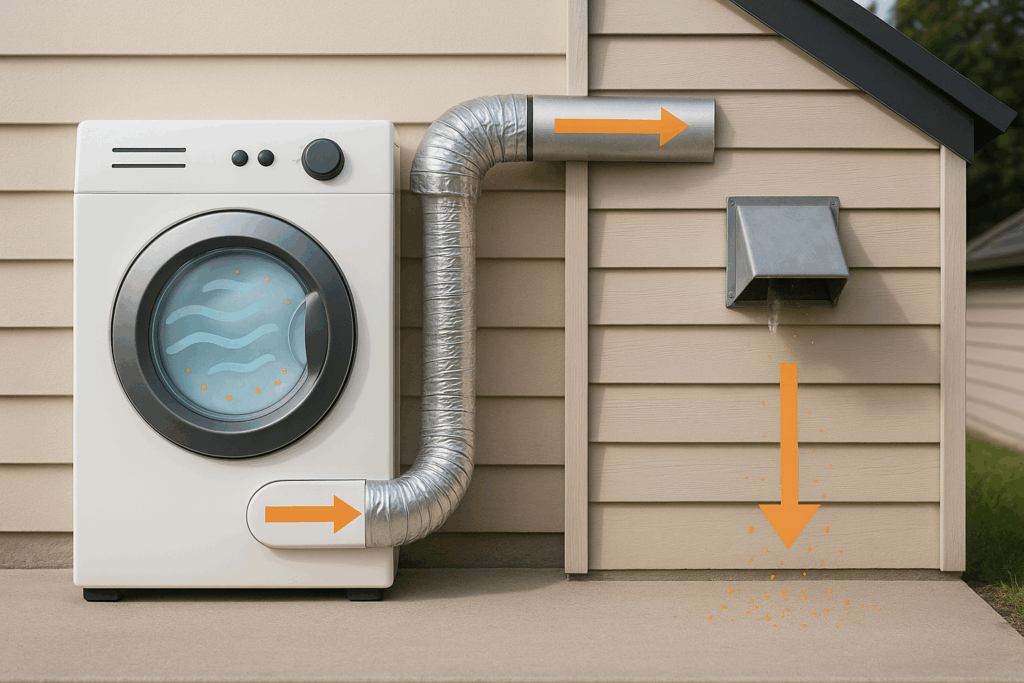
When you toss a load of laundry into your dryer, the final step in the cycle carries moist, warm air out of the drum and through the vent system. That stream of air, its speed, direction, and clarity, is what we mean when we talk about dryer vent airflow. Most homeowners focus on the lint screen in the dryer itself, but the vent’s performance plays an equally important role in the efficiency, safety, and lifespan of your appliance. The sections below explain what good airflow looks like, how it affects your home, and what signs indicate your airflow is compromised.
What Proper Airflow Looks Like
In a typical residence, apartment, or condo, your dryer vent system begins inside the laundry area and ends outside the building. As the dryer tumbles and heats the clothes, hot air mixed with moisture and lint is expelled through the ductwork. When airflow is unobstructed, the vent effectively carries that exhaust beyond the house, avoiding buildup of heat, lint, and moisture indoors.
Good airflow means that the exhaust flows smoothly, the outside vent hood opens properly, and you do not feel warm air pooling in the laundry room. Two authoritative sources confirm this: the International Association of Certified Home Inspectors notes that airflow restrictions are a fire hazard because trapped lint and moisture cause overheating. The United States Consumer Product Safety Commission also reports that lint blocking airflow in the exhaust duct may lead to fires.
Why Airflow Matters for Efficiency
When your dryer exhausts smoothly, it works less hard. Clothes dry faster, you use less energy, and the machine experiences less stress from prolonged cycles. If the vent path is restricted, the dryer must run longer, the drum stays at elevated temperatures for more time, and the appliance may have to repeat or extend cycles. This increased workload leads to higher energy costs and possibly shorter service life of the dryer.
For residents in homes, apartments, and condos, this is especially relevant. In multi-unit buildings or tightly sealed homes, dryer vent paths may be longer or more complex, so the risk of airflow loss is greater. That means your dryer vent airflow should be a regular maintenance consideration when evaluating home efficiency.
Why Airflow Matters for Safety
Beyond efficiency, airflow has a direct impact on safety. That warm air flowing through the vent carries lint, which is a highly flammable substance composed of fibers from clothing made of cotton, polyester, and blended fabrics. If that lint accumulates inside the duct or vent hood, the buildup acts like kindling. According to InterNACHI, lint trapped in the dryer vent can burst into flames.
The Consumer Product Safety Commission adds that fires can occur when lint builds up in the dryer or in the exhaust duct. When airflow is impeded, the dryer’s internal temperature rises. Heat may migrate back toward the drum, the exterior of the machine may become unexpectedly hot, and the surrounding structure may face higher risk.
Key Factors That Affect Dryer Vent Airflow
Duct material and installation: Not all ductwork is created equal. Flexible vinyl ducts or accordion-style materials are prone to crushing, kinking, or lint accumulation.
Length and bends of ductwork: The longer the vent path and the more elbows or tight turns, the greater the restriction. InterNACHI reports that the maximum developed length of a clothes dryer exhaust duct is limited based on the number of turns. A flatter, straighter path supports stronger airflow.
Exterior termination: How the vent exits the structure matters. The terminal hood should not be screened too tightly, should have a proper backdraft damper, and must terminate outside. If it ends in a crawlspace, attic, or too close to other openings, airflow suffers and lint may recirculate. InterNACHI warns that this can also lead to trapped moisture.
Laundry usage and lint load: The amount of lint created depends on fabric types, dryer usage, and how well the lint trap is maintained. A higher lint load combined with restricted airflow accelerates problems.
Signs of Restricted Airflow
When airflow falls short, the symptoms appear in your laundry routine and living space. You may notice that clothes take longer to dry or remain slightly damp at the end of a normal cycle. The exterior of the dryer may feel hotter than usual, or you might feel warm air in the laundry room. The outside vent hood may barely open when the dryer runs, or lint may be visible at the exterior termination.
These warning signs match those identified by the Consumer Product Safety Commission: long drying times, excessive heat buildup, and blocked exhaust paths. Spotting these issues early helps residents address potential airflow problems before they become fire hazards or lead to major equipment failure.
How Proper Airflow Supports Indoor Air Quality
Beyond drying performance and safety, airflow in the dryer vent system affects how moisture and potential pollutants exit your living space. A study by the National Center for Biotechnology Information found volatile organic compounds in dryer exhaust. If airflow is restricted or ventilation is misdirected, moisture and lint can back up into your home, raising the risk of mold, musty smells, and damp conditions.
For residents of apartments or condos, compromised airflow may impact adjacent units or shared walls. Proper venting helps protect indoor air quality and keeps laundry areas fresh and safe.
What Homeowners and Residents Can Do
If you live in a house, apartment, or condo, there are practical steps to support good dryer vent airflow. Clean the lint screen after each load, as it is the first barrier preventing lint from entering the vent. Vacuum behind and beneath the dryer occasionally to remove stray lint, especially if the machine is in a tight space. Check the outside vent hood while the dryer is operating to confirm strong airflow. If the flap barely opens or the airflow feels weak, it may indicate restriction.
Make sure the duct path is as short and straight as possible, and inspect for kinks or crushed sections. If you rent, ask your property management about the vent’s condition and maintenance schedule. In some cases, especially in multi-unit complexes, vent cleaning is handled by building management, but residents should still monitor performance.
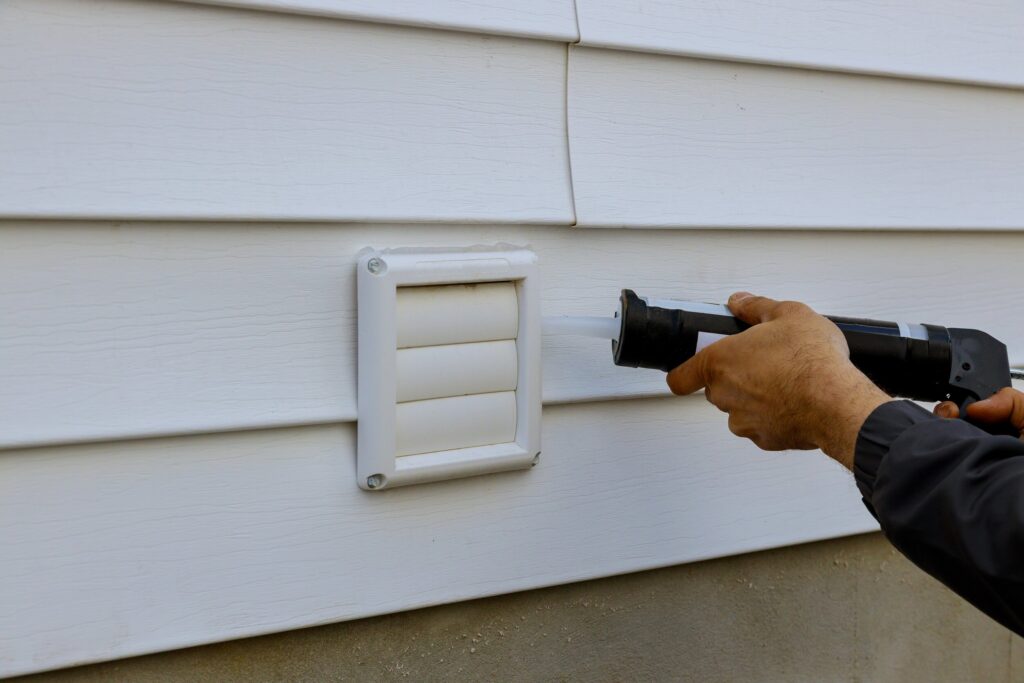
It also helps to confirm that the vent terminates outdoors, not into an attic or crawlspace, where moisture can accumulate and cause damage. Consider adding a vent hood with a guard if you are concerned about birds or rodents entering the duct, but make sure the design does not restrict airflow or become clogged with lint.
The Role of Professional Vent Cleaning
When homeowner-level maintenance does not solve airflow problems, it is time to bring in a professional. A qualified technician can inspect the duct run, measure airflow, identify collapsed sections, and perform a thorough cleaning. This service is particularly valuable in older homes or multi-unit buildings where vent paths are long or poorly designed.
Professional vent cleaning restores strong airflow and reduces fire risk. In Connecticut, where many homes are older and have more complex vent paths, periodic cleaning can be one of the simplest and most effective ways to maintain both safety and efficiency.
The Long-Term Benefits
Paying attention to dryer vent airflow offers clear long-term benefits. Clothes dry faster, which saves time and energy. The dryer operates with less strain, extending its lifespan. Most importantly, clear airflow minimizes the chance of lint ignition, protecting your home and loved ones.
In apartment complexes, proper vent performance also benefits neighboring residents. Shared systems or long duct runs can lead to collective maintenance challenges, so keeping vents clear helps maintain consistent performance for everyone.
When You Move or Renovate
If you relocate or remodel your laundry area, take the opportunity to review the vent system. Confirm how far the vent runs, how many turns it takes, and what materials it uses. When duct runs become too long or use outdated materials, airflow suffers. Some building codes now prohibit thin plastic ducts because they are fire hazards. Renovation projects are the perfect time to make upgrades that keep your home safer and your laundry routine more efficient.
Key Takeaways
Dryer vent airflow is about more than your dryer—it is about how efficiently and safely your home moves moist air and lint outside. Strong airflow supports appliance performance, energy savings, and indoor air quality while reducing fire risk. Restricted airflow leads to longer drying times, higher utility bills, and potential overheating. Whether you own or rent, keeping your vent system clean and unobstructed protects both your property and your peace of mind.
Final Thoughts
Whether you live in a single-family home in Connecticut or a high-rise condo, the performance of your dryer vent deserves more attention than most laundry-room checklists give it. By treating airflow as an essential part of home safety and appliance care, you can improve efficiency and reduce fire risk. If you notice longer drying times, a warm laundry area, or an outside vent flap that barely opens, those are early signs of restricted airflow. Addressing them promptly keeps your home safer, cleaner, and more energy-efficient for years to come.